Qapter – AI Vehicle Damage Estimation
Categories: Transport and Logistics
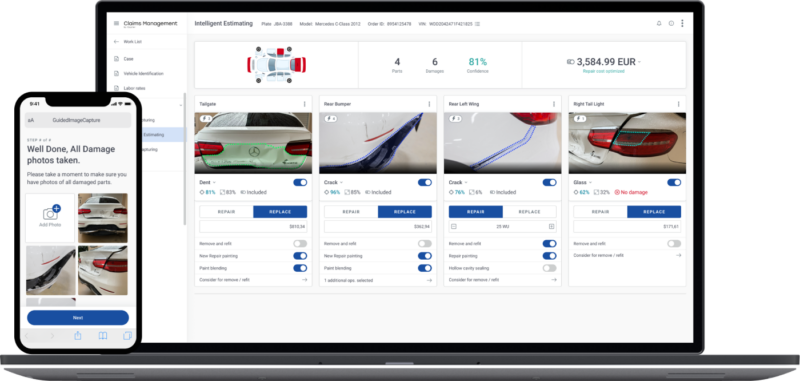
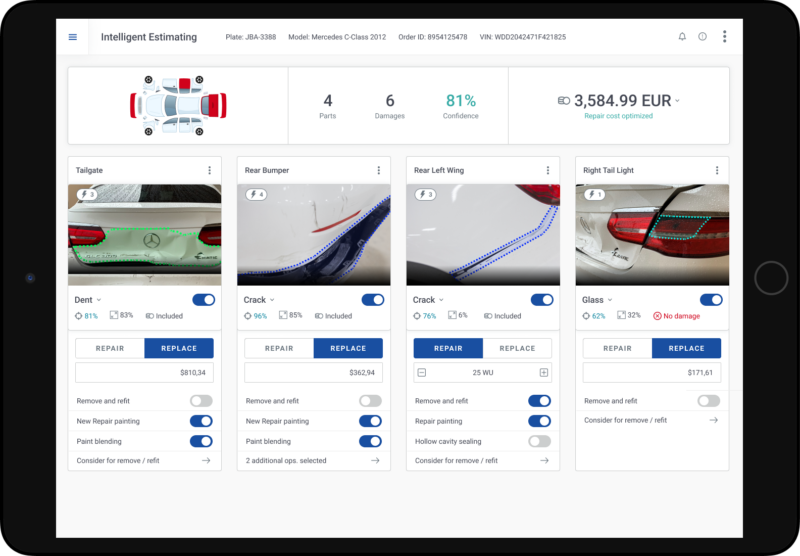
Qapter is Solera’s AI-powered claims solution for the automotive industry, used by insurers, repair shops, and drivers around the world. The platform combines a continuously learning damage-detection model — trained on what Solera describes as the largest claims database in the world — with intelligent estimating, triage, and guided image-capture tools that compress vehicle claims from days into minutes. Within months of launch, Qapter was already auto-authorizing roughly half of damage claims and cutting estimation costs in line with that. FusionWorks contributed to the Qapter mobile experience, focused on integrating vehicle identification scanning into the camera flow so drivers can move through a claim without manual data entry.
AI-Powered Damage Detection at FNOL
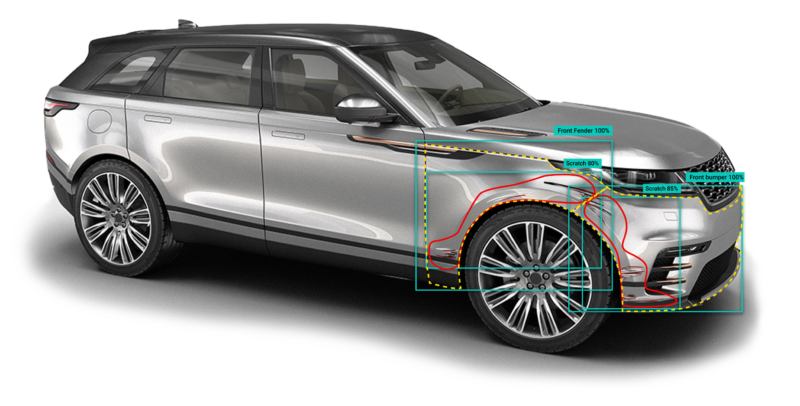
Qapter’s value starts at the First Notice of Loss. Once a driver uploads photos of vehicle damage, the platform’s deep-learning models identify damaged components, recognize the vehicle’s make and model, and propose the parts to be replaced along with the cost of the work. Additionally, Intelligent Triage uses the same photos to decide whether the vehicle is repairable, a total loss, or requires further inspection. This early classification is what saves insurers from sending an adjuster to physically examine a vehicle that an AI can already assess.
Guided Image Capture for Consumers
Damage detection is only as good as the photos it works from, so Qapter put serious effort into helping non-expert drivers take the right pictures. Guided Image Capture overlays a vehicle-specific mask on the camera view and walks consumers through capturing the angles the model needs to work well. Furthermore, the experience is designed for the smartphone in the consumer’s hand at the moment of the incident, not for an adjuster’s tablet. This consumer-first capture flow is what lets the rest of the AI pipeline work reliably.
Integrated VIN Scanning
A defining piece of the Qapter mobile experience is the vehicle identification number scanner integrated into the device camera. Instead of asking the driver to read and type a long alphanumeric VIN, the app recognizes it directly from the windshield, dashboard, or registration document and feeds it into the claim. Meanwhile, the same camera pipeline supports the damage-photo workflow, so the user never has to switch tools to complete a claim. This is the kind of detail that turns a working app into a usable one.
Development and Implementation
FusionWorks contributed to Qapter’s mobile work, focused on the Android side of the experience and on the integration of the VIN scanner with the device camera. Our team worked on the seamless capture flow that ties scanning, image input, and the broader claims journey together so the end user moves through a claim without friction. We worked alongside the Qapter product and engineering teams to ship improvements that hold up under the demands of a globally deployed insurance product. Furthermore, our involvement supported a feature that sits at one of the most user-visible points in the entire claims experience.
Qapter shows what happens when a deep proprietary dataset, mature AI models, and careful mobile product work come together — claims processing that drops from days to minutes for insurers, shops, and drivers alike.
Tech: Kotlin (Android)