angen.ai
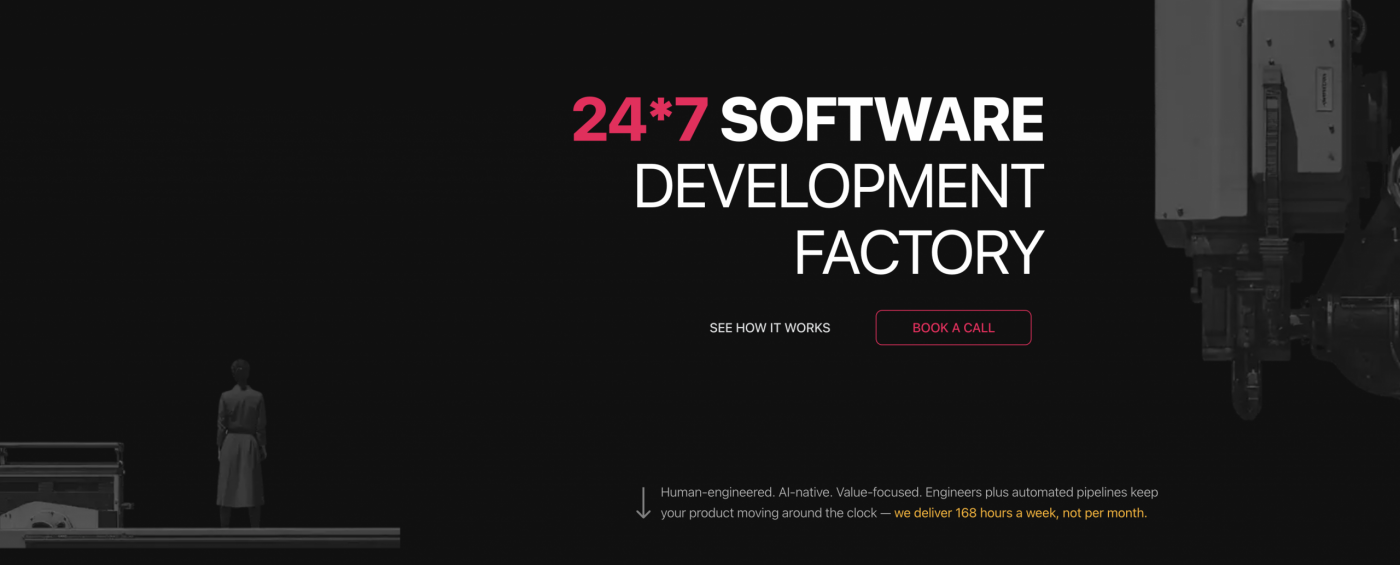
24*7 Software Development Factory
angen.ai is a software delivery platform built by FusionWorks and used on our own projects. It turns a conventional engineering team into a round-the-clock factory: engineers make the decisions during the day, and a pipeline of AI agents carries scoped work through the night and over weekends, under human review. A team that works 40 hours a week produces 168 hours of output. FusionWorks designed, built, and operates the platform, and it is now the standard way we deliver software.
A 24-Hour Delivery Cycle
The platform organizes the working day as a loop rather than a shift. Each morning it delivers a report on what the night shift completed, and the team spends daytime hours on decision-intensive engineering, demos, and client feedback. In the evening, engineers hand off clearly scoped work to the pipeline. Overnight, agents execute that work and prepare the next morning’s report. This is what lets a project show finished work every morning instead of promises at the end of a sprint.
Humans Decide, Agents Execute
angen.ai draws a hard line between judgment and execution. Architecture, complex integrations, planning, and every quality gate stay with named engineers. The agents take on code review, security checks, refactoring, tech-debt cleanup, and test fixes, and none of it ships without a human approving it. This is what keeps the speed gain from turning into a quality risk. Furthermore, the same agents keep working after release, monitoring production, running tests, fixing errors, and proposing the next improvements.
Context That Belongs to the Project
Agents are only as good as what they know about the codebase. angen.ai runs every task against the project’s own repository, standards, and knowledge base, so the output follows the conventions the team already uses rather than generic patterns. Each run produces reviewable output with file-by-file diffs and version history, and every decision is traceable back to the task that triggered it. Additionally, the platform keeps that context across handoffs, so a task scoped by an engineer in the evening carries the same assumptions when an agent picks it up at night.
Development and Implementation
FusionWorks built angen.ai end to end. Our team engineered the agent orchestration layer that picks up scoped tasks, executes them with project context, and returns reviewable results, and integrated it with CI/CD pipelines, automated security and test gates, and the reporting that generates the morning summary. The web application and the angen.ai site were built on Next.js and TypeScript. Furthermore, because we use the platform on our own client projects every day, it is developed against real delivery pressure rather than a roadmap, and it runs inside our ISO 9001 and ISO 27001 processes.
angen.ai is FusionWorks’ answer to what software delivery should look like now: human engineering where judgment matters, automation everywhere else, and a delivery clock that never stops.